The poem allows us to perceive our presence as feeling, sensing, thinking beings oriented in time and place with others. As we read queer contemporary poets such as Bianca Rae Messinger, Gabriel Ojeda-Sagué, and Jimin Seo, we will discuss poems as timelines and architectures—as rooms, times of day, memory, and dreams evoked by our reading together. In moments of encounter and entanglement, we write to invent form and rediscover language.
Grammar(year-long course) | Bard Prison Initiative, New York State | September 2021-present
Grammar is the study of language as a technology of mediating realities. It is a study of structural forms and technical names for those forms, and a study of historical, ideological, political uses and concepts of those forms. The study of grammar centers students’ practices and experiences of writing, reading, and thinking.
In Grammar for Writers, students notice, reflect upon, and experiment with sentence and paragraph forms they compose and encounter. Students approach the structural logics of “subject-predicate thinking,” “complete thought” and “stand-alone sentence” as pathways and obstacles to articulating realities, both shared and contested. Texts include: Gloria Anzaldúa, James Baldwin, David Crystal, Marcy Dinius, Cathy Park Hong, June Jordan, Jan Mieszkowski, N.H. Pritchard, and Beth Barton Schweiger.
Grammar, Rhetoric, and Style turns to the structures and uses of genre in a comparative, historical, and practice-oriented study of academic essay forms and literary essay forms. Students notice and reflect on the dynamic conventions of essay structures, citational references, rhetorical situations, and truth-claims across academic disciplines and discourses of cultural criticism. How and why do the academic essay and the literary essay define themselves against each other? And how and why do they simultaneously appropriate conventions from one another to bolster their contrasting modes of academic veracity and literary personality, respectively? Texts include: Michelle Alexander, Roland Barthes, Jorge Luis Borges, Joan Didion, Mohammed El-Kurd, Gerald Graff and Cathy Birkenstein, Ismail Ibrahim, Lucy Ives, Verlyn Klinkenborg, Phillip Lopate, Michel de Montaigne, Amber Jamilla Musser, Georges Perec, Sei Shonagon, and Sara Suleiri.
Archives, Experience, and the Everyday| Bard Masters of Art in Teaching, Annandale-on-Hudson, NY, Summer 2025, Summer 2026 | Bard Prison Initiative, Fall 2025
The nature of experience and everyday life poses a challenge to literary and philosophical representation, as well as to historians’ concerns with the dynamic, particular, relational contexts of phenomena. The “archive,” moreover, has moved beyond historians’ traditional document collections to popular forms of creating, altering, arranging, and mediating records across diverse media platforms and presentations. How do cultural practices, old and new, of documenting everyday experience and popular memory bring new questions and energy to the practices and methods of history? Students survey theories and practices of literary documentation, the Latin American cronica, popular archiving, and colonial and postcolonial reading practices and visual cultures. Texts include: Meera Ashar, Ariella Azoulay, Richard J. Bernstein, Adrian de Leon, Arlette Farge, Tania Gentic, Gabriella Giannachi, Saidiya Hartman, Kaleem Hawa, Mohamad Junaid, Clarice Lispector, Hisyar Oszoy, Georges Perec, Jürgen Rüsen, Rebecca M. Schreiber, and Michael Sheringham.
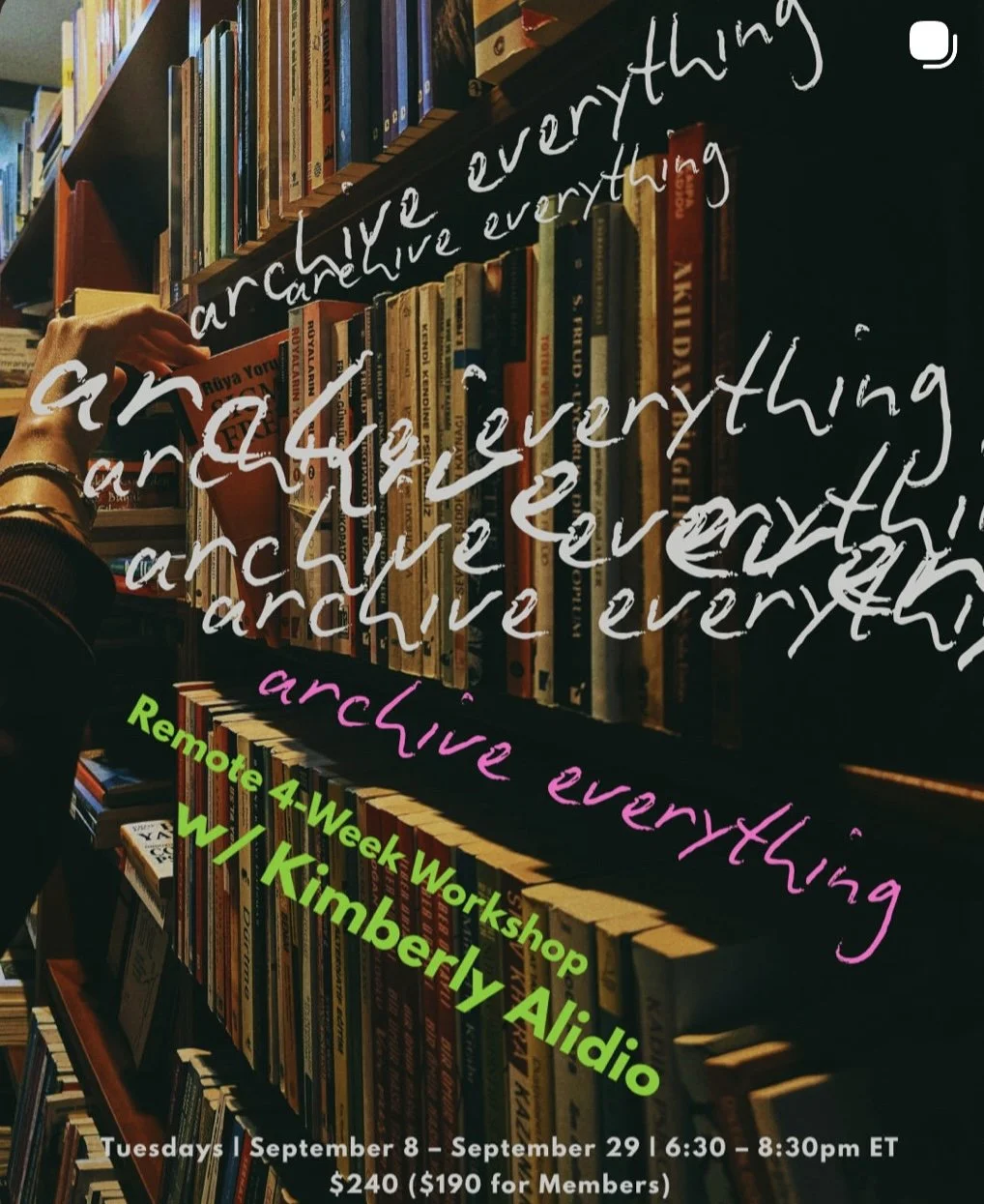
Archive Everything | Poets House: 15 Sep-6 Oct 2026, 6:30-8:30p ET
The archive is an archaeological, relational system in which any one artifact does not possess a fixed, self-contained meaning; significance emerges through the changing relationships among the artifact, its context, and those who encounter it. New contexts and new users continually produce new meanings: let’s see how interactions among us, our distinct archives, and writing generate new meanings! This poetry workshop offers a process-oriented, collaborative space for generative writing, rather than for formal critique. It may be of interest to those who’d like to discuss any of the following: poetry of witness, documentary poetry, autowriting, interdisciplinary work, immersive environments, time-based art, diasporic cultures, cabinets of curiosity, seriality, revision, memory, and forgetting; participants are invited to add to this list. Anyone who cares about making things, including a life with language, is invited to join. Texts include: Emily Abendroth, Zach Blas, Hal Foster, Sallie Fullerton, Aeon Ginsberg, Noor Hindi, Margaret Iverson, Bernadette Mayer, Jyoti Mistry and Ram Krishnan Ranjan, Susan Morris, Gabriel Ojeda-Sague, Georges Perec, and Susana Plott-Piñeda. Poets, prose writers, and interdisciplinary artists are welcome.
Theory and Practice of Pedagogy | Bard Prison Initiative, New York State | Summer 2024
A tutoring session conducts several conversations at the same time. It is a social conversation between two people: a collegial and practical conversation between two students with different experiences and perspectives on academic work, namely a particular project-assignment one of the students is working on. It is an internal conversation between a writer and a text (or between a “writer-self” and a “reader-self”) that happens as a writer reads a text aloud to the other person, or hears the other person read the text aloud, and annotates the text with feedback and questions; in other words, it is a discursive conversation in which a writer works out what to write within the container of someone’s active listening. It is also problem-solving conversation in which uncertainty, risk, blockage, “academic emotions,” exclusion, assimilation, standards, resources, citation styles, grammar issues, thesis statements, evidence, etc may be named, transformed, and made meaningful for reflective action and collective thinking. Finally, it is a generative conversation in which a writer senses how a future piece of writing will be a part of ongoing and new conversations, both with readers and with other people in the writer’s social and professional lives.
Working from a growing body of material on how people learn, students investigate successful models of teaching and tutoring, and how they can inform an understanding of academic work as a live, creative, and critical practice. Students explore their own learning experiences and begin to learn and practice ways to provide productive feedback and guidance to fellow learners. Texts include: Katie Barclay, Jo Boaler, Deborah P. Britzman, Jeff Brooks, Kenneth Bruffee, Grace Enriquez and Andrea Vaughan, Paulo Freire, Muriel Harris, Alex Johnson, Gary Lichtenstein, and Thomas Newkirk.
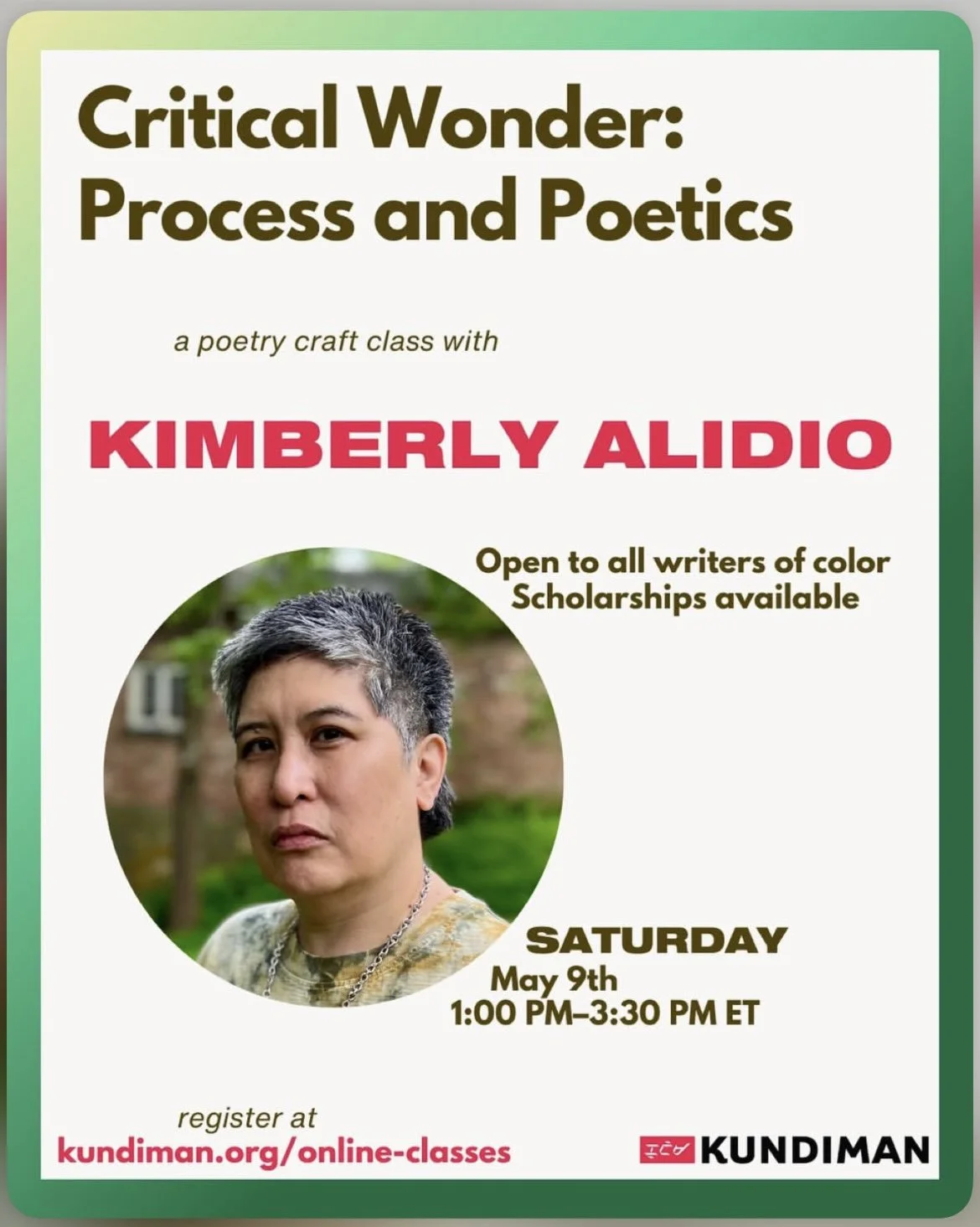
Critical Wonder: Process and Poetics | Poets House, New York, NY: 7 Oct -11 Nov 2025, 6-8p EDT (Six-week workshop)| Kundiman, New York, NY: 9 May 2026, 1-3:30p EDT (One-day craft class [video])
When we regard the craft of writing as fluid and experiential, the texts we make start to function as traces of the everyday that can teach us how to write further. This workshop looks at the poem as an archive of personal, collective becoming, a storehouse of myriad subjective experience. In the spirit of “critical wonder,” we will discuss craft issues, such as the line break and visual-sonic forms, as matters of practice, philosophy and politics threaded through our own lives as people in the world. Texts include: Etel Adnan, Jenny Boully, Lisa Hsiao Chen, Betsy Fagin, Tehching Hsieh, Pamela Lu, Susette Min, Fred Moten, Fargo Nissan Tbakhi, Catherine Wagner, and kathy wu.
The Time of a Sentence: Flash Poetic Essays | Poetry Society of New York | 1 May 2025
How do we experience time when we open up to language at the moment of composition? What did Joanne Kyger mean when she advised poets to not revise that language? What did Gertrude Stein mean by "composition?" What does Renee Gladman mean by “poetic time,” and how do we experience it in the sentence? How do we write timeless poetry that belongs to the contemporary moment? What does it mean to “essay” when we understand the word “essay” means “to try”? What is a "poetic idea" or "poetic evidence"? We will get together to make poetic proposals that tap into the collective mind/ spirit reflecting our time together in workshop.
American Empires: Culture and Counternarratives | Bard Masters of Art in Teaching, Annandale-on-Hudson, NY | Summer 2024
Which languages, terms, definitions, and usages have persisted through colonization, so to speak, to tell the tale? What are the ecological, technological, social, political, and historical contexts complicating authorship, agency, and learning? How do we study the “archive” ethnographically as much as they use it to extract data? What are the discursive politics of memory, prediction, and speculation? This course surveys North American and US political participation in settler colonialism, insurgency and counterinsurgency warfare, transatlantic slave trade, militarized statecraft, global transnational states and markets, and, finally, a range of recognized and autonomous organizations countering colonial-imperial ways of knowing the world through form, culture, theory, and action. We will highlight a range of conventional and innovative ways to engage the poetic energies of historical documents and academic writing. Our objective is to study how people study and reflect on their lived realities to flourish autonomously against, in the midst of, and in the afterlives of empire.
Language and Thinking | Bard Prison Initiative, New York State; Bard College Institute for Thinking and Writing, Annandale-on-Hudson, NY | August 2021-present
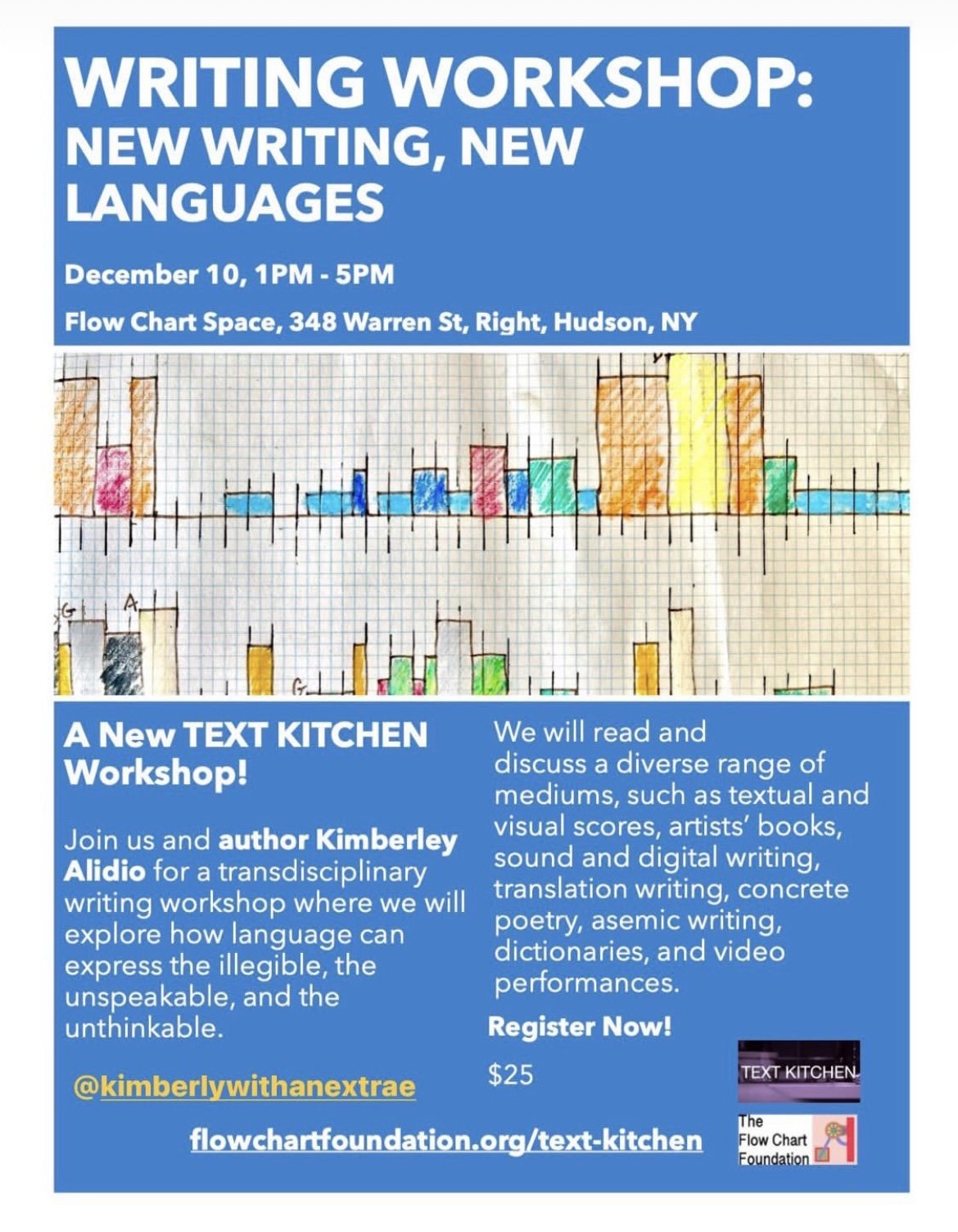
In this in-person workshop, we will embark on transdisciplinary writing that might extend language into communicating the illegible, the unspeakable, and the unthinkable. We will entertain both the critical necessities and flights of fancy that might move us to write (with) a new kind of language, while paying respect to the languages of heritage and artistic practice we bring into the workshop. This new writing and new language may come from moving the hand, listening with the whole body, and marking or transcribing sound, breath, and space. Together, we will read textual and visual scores; artists books; video, sound and digital writing; translingual literature; concrete poetry and asemic writing; dictionaries and indexes; and video-performance writing.
The Milton Avery Graduate School of the Arts at Bard College | Annandale-on-Hudson, NY | June 2022
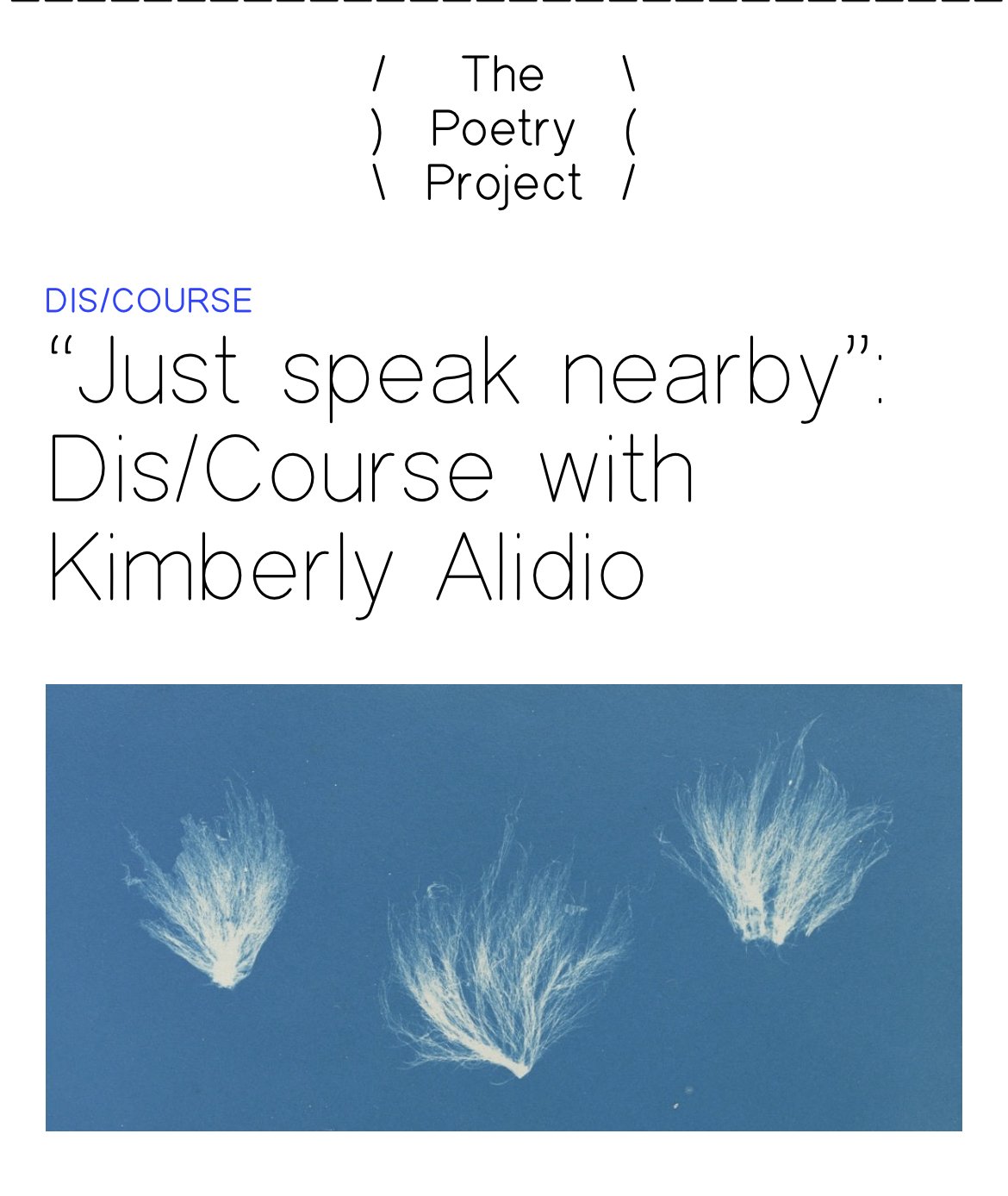
Trinh T. Minh-ha says in her first film Reassemblage: “I do not intend to speak about; just speak nearby.” To “speak nearby” is to participate in co-listening, as well as speaking, in a moment shared with another across separate, albeit proximal, locations. This Dis/Course is an occasion to gather and make assemblages — screwed, welded, nailed pieces of sonic, voiced, textual materials of spatialized utterance — which one might call poems. Poetry recreates spatial ecologies of embodied speech and listening, and, I propose, has some similarities with sound art, which, according to Alan Licht, is an immersive experience through architectural space (as opposed to requiring one remains in place for the predetermined time of a musical performance or recording). How do poetic utterances move with found sounds of disturbed landscapes and diasporas: the affective tones, pitches, prosody, ambience, and noise by which a space speaks? And how do poems listen to others’ speaking? In the spirit of poetic assemblage, we will read sonic-focused writing, listen to sound poets and experimental vocalists, and, perhaps, write with found (recorded) sounds as one would speak nearby.
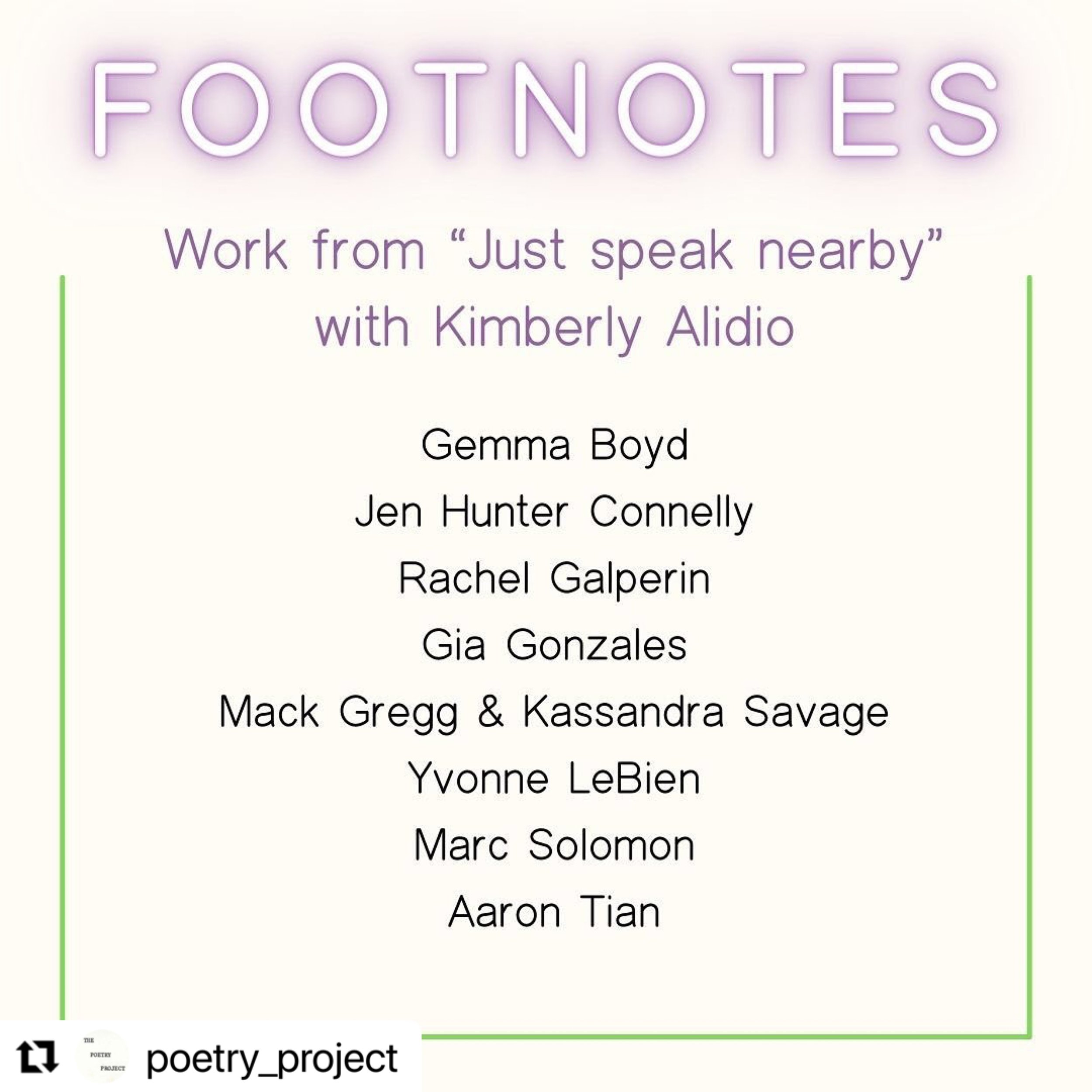
From the workshop, published work by Gemma Boyd, Jen Hunter Connelly, Rachel Galperin, Gia Gonzales, Mack Gregg & Kassandra Savage, Yvonne LeBien, Marc Solomon, and Aaron Tian.
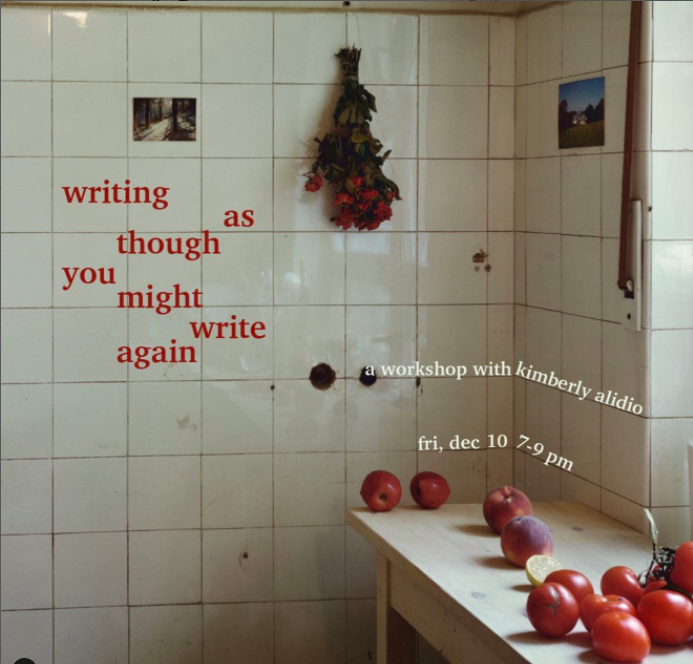
A writing prompt is a kind of recipe. And the proliferation of recipes, writes Danny Licht, makes cooking a matter of technically worded instructions, timers, measurements when it should be instead a practice of connecting with one’s senses and what is at hand. This hybrid writing workshop is about our tastes, and the steps we take in our lives and writing to suit them. This workshop is about writing as though we might write again, akin to “cooking continuously, of allowing one thing to lead to another, of open-endedness and casual possibility” (Licht 13).
Perception Is Material (co-taught w/ Stacy Szymaszek) | Summer Writing Program, Jack Kerouac School, Naropa University | June 2021
The act of perceiving the world and the archival/ official document is as much the material of the poem as the world and the document are. We will consider how poetry — in its prosodic and energetic charge, rather than in its reference to a world beyond perception — documents our material worlds. We will discuss how poets document what we might call oppositional realities, and how poets engage the texts and textures of archival/ official documents. (You are welcome to bring in your own archive or begin to create one for this workshop.) Through reading, discussion, and generative writing, we will together move towards radical possibilities in documentary poetry practice.
Poets can care about and for language used to pose questions. We can make multi-dimensional macro-micro inquiries into the language used to pose answers. As much as we are typically tasked with imagining, we can attend to what is present and to what is already arriving. This eight-weeklong workshop splices together the poetic techniques of recording everyday life and engaging political-historical documents used to ask how poets subvert a self subject to the state, neoliberal capitalism, and the cultural diversity machine. We will write poems of our working and domestic day to ask, What is possible in the act of documentation? We will engage both the vitality and violence of archival documents, and turn our gaze back onto the documenter’s authority. We will write from the crossroads where past, present, and future are already in conversation.
Artist talk on Repeater by Julie Tolentino (Curator and host), 18 August 2021
Introduction to Poetry | University of Arizona, Creative Writing, Tucson, AZ | 2021
United States History, 1600s-2000s | Bard Early College Hudson Valley, Hudson, NY | 2021-2022
Compositionand Rhetoric | University of Arizona, English Department, Tucson, AZ | 2018-2020
United States History, 1600-1865; U.S. History and the World in the 20th Century;Seminar in Cosmopolitanism | St. Stephen’s Episcopal School, Austin, TX | 2012-2018
Diverse American Perspectives; Global Perspectives | St. Edward’s University, University Programs, Austin, TX | 2011-2012
Asian American History | University of Illinois, Asian American Studies, Visiting Professor and Post-doctoral Fellow, Urbana-Champaign, IL | Spring 2010
Asian American History; US Empire; Gender and Sexuality in History | University of Texas, Assistant Professor of History and Asian American Studies, Austin, TX | 2001-2009
Filipino American History | University of Michigan, Program in American Cultures, Ann Arbor, MI | Spring 1999
History of Chicago | Columbia College Chicago, Chicago, IL | Spring 1998
Artist talks
Conversation with the Contemporary Poetics Working Group, hosted by Tessa Bolsover + Michael Cavuto | John Hope Franklin Humanities Institute, Duke University, Durham, N.C. | 16 November 2023
Sonic Languages 4: The Mutable Poem, An Artist Talk on Teeter, hosted by Noah Ross + Small Press Traffic | Et al. books, San Francisco, CA | 22 October 2023
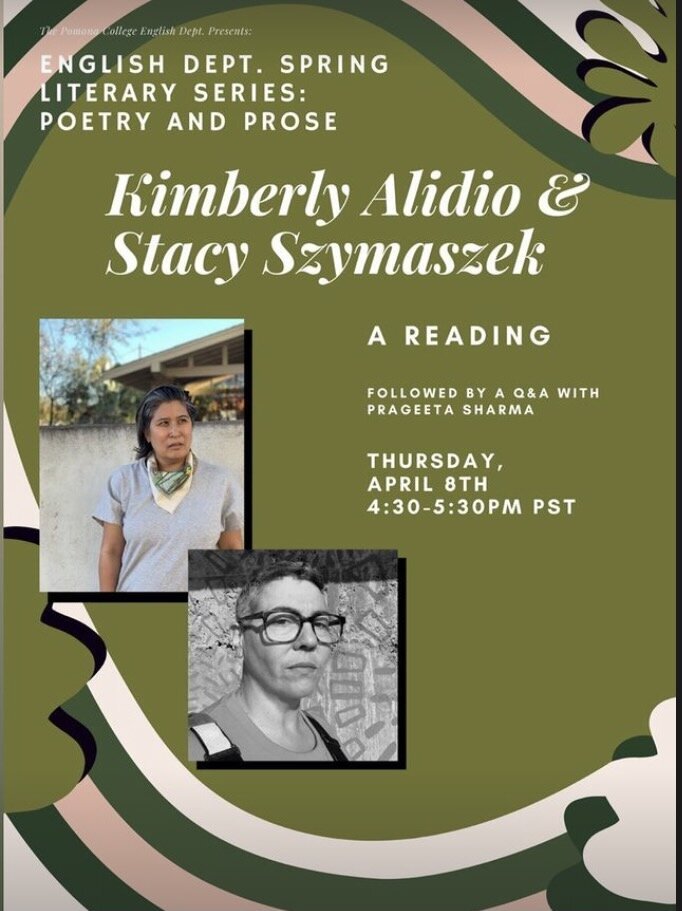
Artist talks & reading on : once teeth bones coral : and Famous Hermits, w/ Stacy Szymaszek, hosted by Prageeta Sharma | Literary Series: Poetry and Prose | Pomona College, Claremont, CA | 8 April 2021
Artist talk on : once teeth bones coral : , hosted by Gabrielle Civil | Writing Now Reading Series | California Institute of the Arts, Santa Clarita, CA | 2021
Artist talk on after projects the resound w/ Jason Magabo Perez, hosted by Josen Diaz and May Fu | University of San Diego, San Diego, CA | 14 March 2017
Artist talk on after projects the resound, hosted by James McMaster | PERFUT 306 - Race and Performance | New York University, New York, NY | 2017
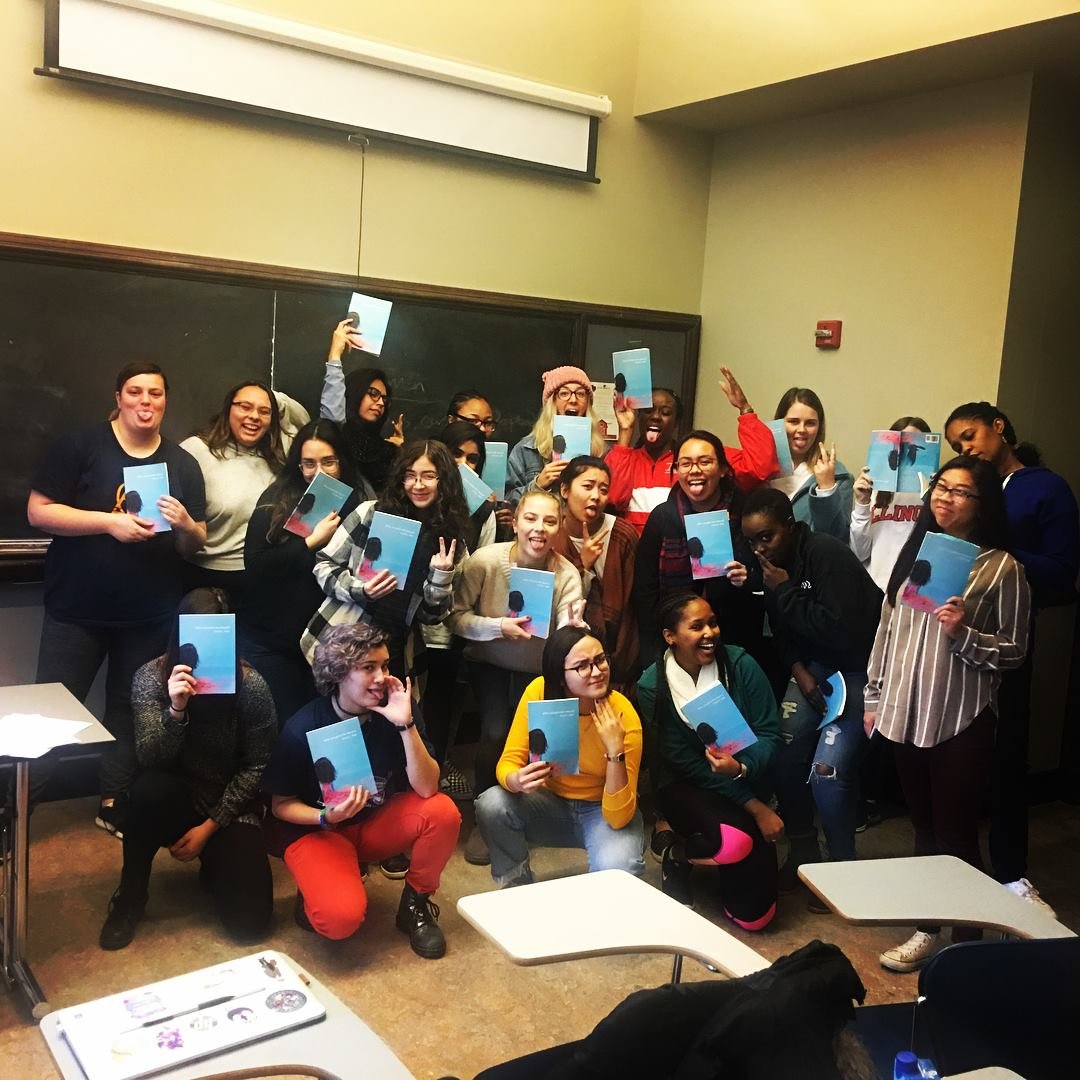
Artist talk on after projects the resound, hosted by Ruth Nicole Brown | GWS 201: Race, Gender and Power | University of Illinois, Champaign-Urbana, Urbana, IL | 2017
Artist talk on solitude being alien, hosted by Fred Moten | University of California-Riverside, Riverside, CA | 2016